



RELATED
MESSAGE
Commercial Beer Brewing Equipment Materials: How to Choose Durable, Sanitary & Flavor-Neutral Options
Sep 07, 2026
When opening a commercial brewery or craft beer taproom, most operators make mistakes not in brewing techniques, but in choosing the wrong equipment materials.
For brewhouse tanks, fermenters, and cold water tanks, the material directly determines three core factors: beer flavor purity, equipment service life, and daily maintenance difficulty. Commercial brewing operates completely differently from home brewing. Commercial units withstand long-term high-temperature processing, frequent acid and alkali cleaning, and repeated fermentation pressure. Therefore, corrosion resistance, sanitary performance, and structural stability of materials are indispensable.
Based on years of on-site industry experience, this article comprehensively explains the pros and cons, applicable scenarios, and purchasing pitfalls of mainstream commercial brewing materials. It serves as a practical reference for new brewery setup, equipment upgrading, and bulk procurement.
Why Material Selection Matters for Commercial Brewing Equipment
The entire beer brewing process involves weak acid environments, high humidity, high temperatures, and frequent sanitization. Wort and fermented beer contain organic acids, sugars, and proteins. Daily maintenance also includes regular cleaning with alkaline and acidic solutions, boiling water, and automated CIP cleaning cycles.
Substandard materials will lead to the following common problems:
- Metal ion precipitation causes metallic rust and bitter off-flavors, ruining beer taste and consistency
- Inner tank wall corrosion, peeling, and residue buildup lead to bacterial contamination and unstable batch quality
- Poor resistance to repeated sanitization causes rusting and leakage within 1–2 years, resulting in high repair and replacement costs
- Failure to meet food-grade safety standards, resulting in inability to pass official food safety inspections
For commercial brewing scenarios, material selection must prioritize three core indicators: food-grade safety, acid and alkali corrosion resistance, and long-term operational stability.
Mainstream Commercial Brewing Materials: Pros, Cons & Application Scenarios
1. 304 Food-Grade Stainless Steel (Standard Commercial Grade)
Over 90% of commercial craft beer equipment and large-scale brewery systems adopt 304 food-grade stainless steel. It is recognized in the industry as the most cost-effective and practical material for commercial brewing.
Its properties perfectly match commercial brewing working conditions:
- Zero flavor interference: Chemically stable with wort and beer, no metal precipitation. It fully preserves original beer aroma and taste without producing off-flavors.
- Excellent corrosion resistance: Tolerates weak acid beer environments, routine CIP chemical cleaning, boiling temperatures, and low-temperature fermentation without rusting, corrosion, or deformation.
- Superior sanitation performance: The inner wall can be mirror-polished with no pores or dead corners. It minimizes residue buildup of malt, yeast, and protein, enabling thorough cleaning and greatly reducing contamination risks.
- Long service life: With proper maintenance, 304 stainless steel equipment can operate stably for more than 20 years, lowering long-term depreciation costs.
- Full compliance: Meets global food production safety standards, suitable for all commercial breweries and craft beer venues.
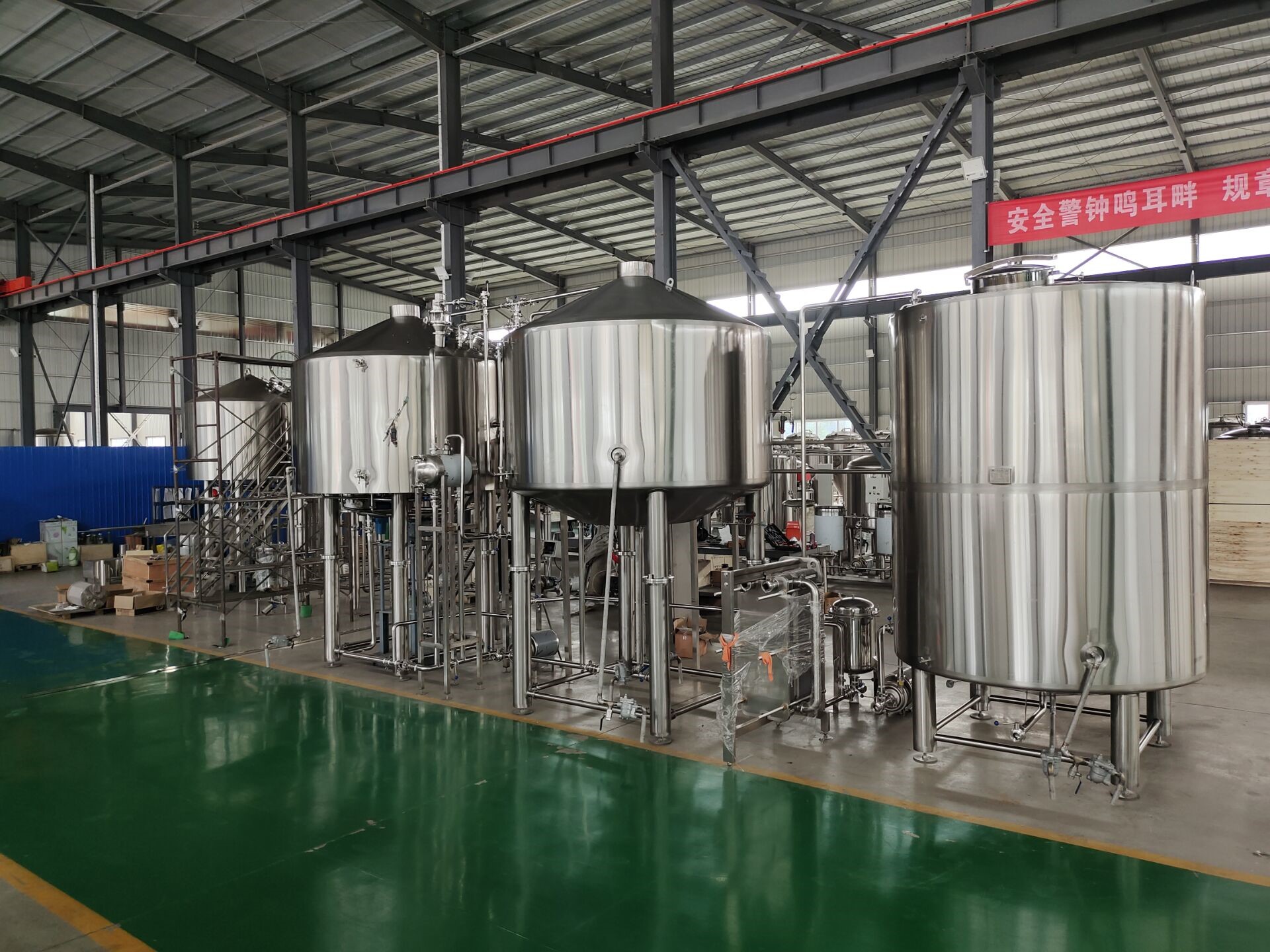
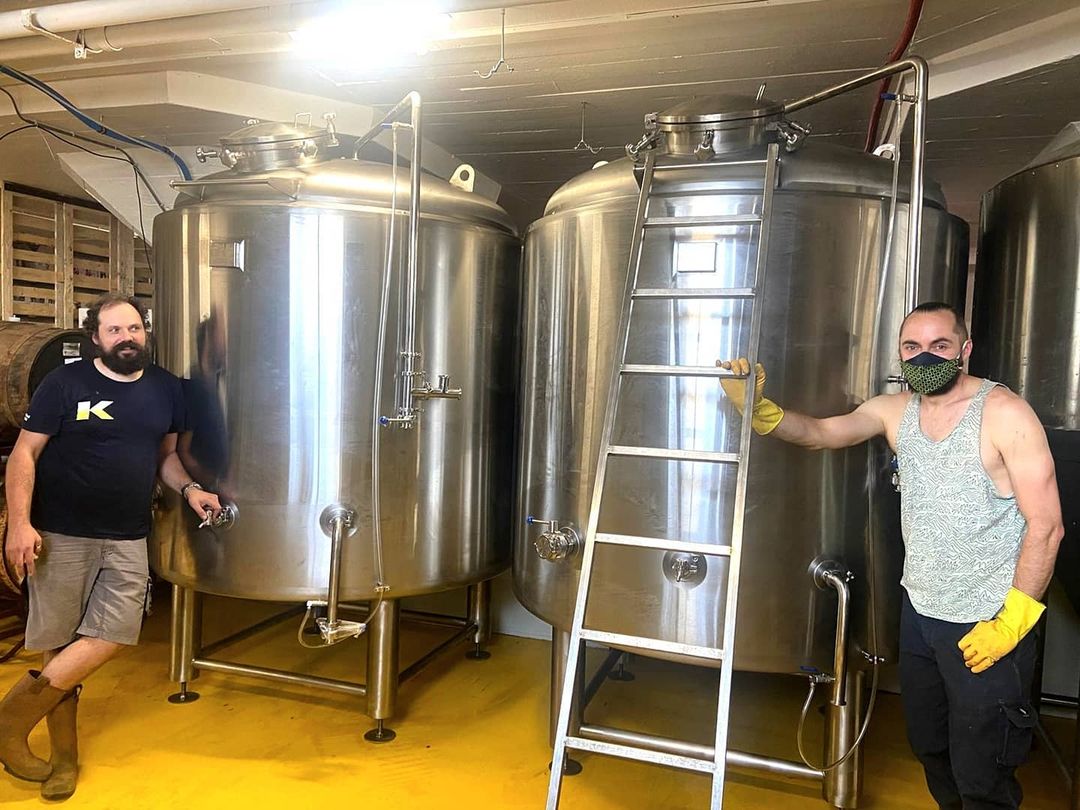
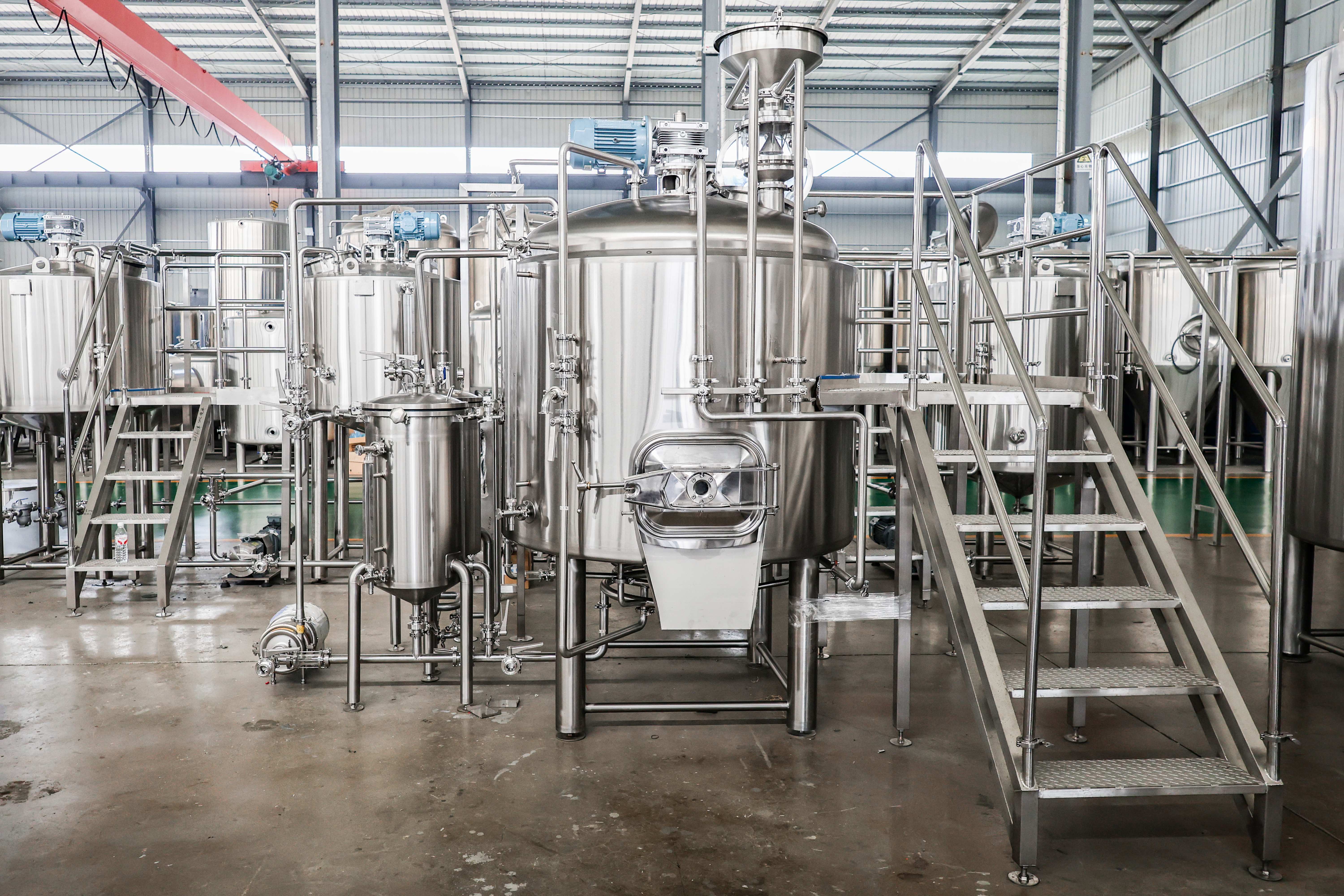
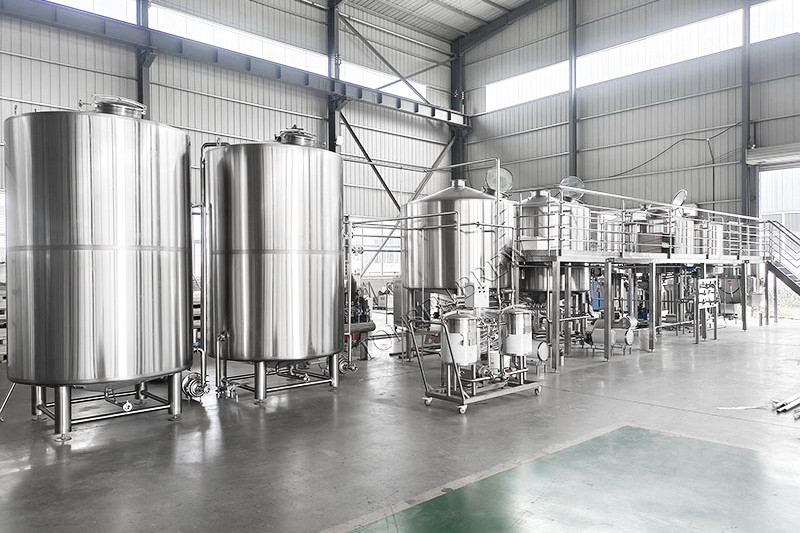
Applicable equipment: Brewhouse tanks, boiling kettles, whirlpool tanks, fermentation tanks, bright beer tanks, hot water tanks, pipelines, valves, and most core brewing accessories.
Key reminder: Many low-cost devices use non-standard 201 stainless steel to replace genuine 304. Although visually identical, 201 steel has poor corrosion resistance and will rust and cause flavor contamination within half a year of commercial use. Always request official material test reports before purchasing.
2. 316 / 316L Stainless Steel (High-End Heavy-Duty Grade)
316 stainless steel is an upgraded version of 304 with added molybdenum, significantly enhancing resistance to corrosion, chloride ions, and strong acids. It is classified as a high-end material for premium commercial brewing. The low-carbon 316L further eliminates welding corrosion risks for maximum stability.
Compared with 304 stainless steel, its advantages stand out in heavy-duty brewing conditions:
- Withstands higher-concentration chemical cleaning and prolonged high-temperature sanitization for better aging resistance
- Superior tolerance to salty and acidic brewing environments, ideal for fruity beers and sour beer production
- Prevents intergranular corrosion at welding seams, ensuring tighter sealing and more stable equipment operation
Applicable scenarios: High-end craft breweries, dedicated fermenters for sour and fruity beers, large-scale mass production lines, and export-grade brewing systems with strict hygiene requirements.
Disadvantages: 316/316L material costs considerably more than 304. Full 316 equipment upgrades are unnecessary for standard American and German-style craft beers; targeted component upgrades offer better cost performance.
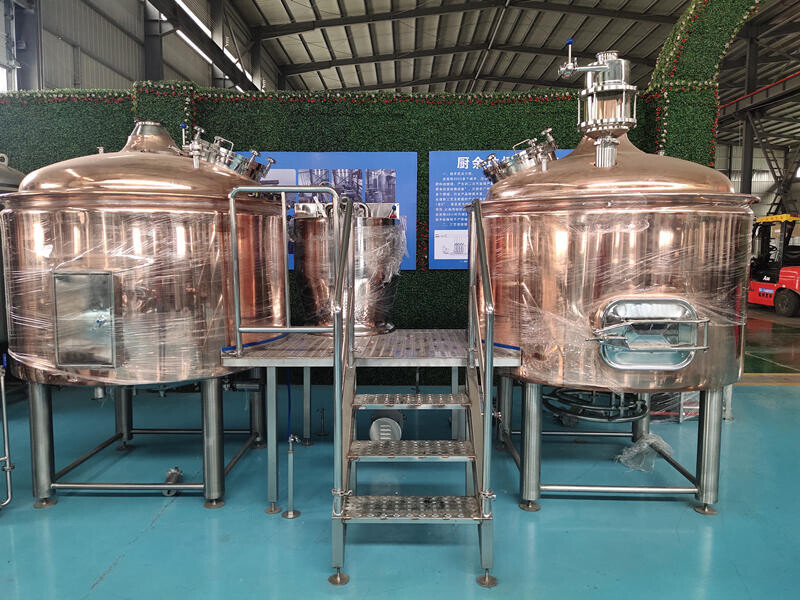
3. Copper (Traditional Flavor-Optimized Material, Not for Full Commercial Use)
Copper equipment is commonly seen in traditional European breweries and premium handmade craft brewing. However, it is only suitable for partial use, not full commercial system construction.
Copper’s greatest advantage is outstanding thermal conductivity. It heats evenly and accelerates heat exchange, effectively volatilizing DMS (dimethyl sulfide) during boiling to eliminate vegetal and corn-like off-flavors. This results in cleaner, smoother beer with richer flavor layers, making it a classic traditional brewing material.
Nevertheless, it has obvious limitations for commercial mass production:
- Copper reacts with organic acids in beer, forming copper salts after long-term immersion and causing metallic off-flavors in excess
- Prone to oxidation and blackening, requiring frequent polishing and high maintenance costs
- Incompatible with strong acid and alkali cleaning, unable to adapt to standard automated CIP cleaning processes
- High material cost and low mechanical strength, unsuitable for pressurized fermentation and storage tanks
Applicable scenarios: Limited to boiling kettles and small experimental brewing systems. Ideal for niche breweries focusing on traditional craft flavors, but not recommended for full commercial production lines.
4. Aluminum Alloy (Low-Cost Transitional Material, Not Recommended for Commercial Long-Term Use)
Aluminum alloy is lightweight, affordable, and thermally conductive, once widely used in small simple brewing setups. However, it has been completely phased out by formal commercial breweries.
Its fatal drawbacks for brewing are as follows:
- Easily reacts with weak acid beer and cleaning chemicals, releasing aluminum ions that cause bitter tastes and beer turbidity
- Fragile oxide surface peels off easily, causing persistent residue buildup and high bacterial contamination risks
- Low structural strength and poor pressure resistance, unable to support high-precision fermentation and beer storage
Summary: Only suitable for temporary small-batch trial brewing and non-commercial use. Strictly avoid aluminum alloy for formal commercial brewing operations.
5. Carbon Steel / Ordinary Iron Pipes (Obsolete Materials)
Carbon steel was used in ultra-low-end brewing equipment in the early industry stage. Despite its low price, it suffers from terrible corrosion resistance and frequent rusting, which causes severe bacterial growth and flavor damage. It fails to meet modern food safety standards and has been completely eliminated from mainstream commercial brewing. Only a few outdated small workshops still use it, and new breweries should avoid it entirely.
Practical Commercial Brewing Material Selection Guide
Below is a foolproof material selection solution suitable for craft beer taprooms, small breweries, and medium-scale production lines:
- Brewhouse System (Mash Tun, Boiling Kettle, Whirlpool Tank): Standard 304 stainless steel. For premium flavor output, choose 304 inner tank with copper outer heat conduction layer.
- Fermenters, Bright Tanks & Water Tanks: Full 304 stainless steel for standard brewing; upgrade to 316L stainless steel for sour beer, fruity beer, and high-frequency mass production.
- Pipelines, Valves & Heat Exchange Accessories: Full 304 stainless steel; avoid plastic and ordinary iron components in direct contact with beer.
- Auxiliary Parts (Filters, Scrapers, Joints): Food-grade 304 stainless steel to prevent non-food material contact with beer liquid.
Common Equipment Purchasing Misconceptions
1. Prioritizing price over material quality: Low-cost equipment usually adopts 201 stainless steel or thin non-standard 304 material. It saves initial investment but leads to rusting, flavor contamination, and high replacement costs in the long run.
2. Unnecessary full 316 stainless steel upgrades: 304 stainless steel fully meets the demands of standard craft beer brewing. Full-system 316 upgrades only increase costs without practical benefits.
3. Blind pursuit of full copper equipment: Copper only serves as a flavor-optimizing auxiliary material. Full copper systems are high-maintenance, unstable, and unsuitable for commercial mass production.
4. Ignoring inner wall polishing technology: Even genuine 304 stainless steel will cause residue accumulation and bacterial growth if poorly polished, resulting in unstable batch flavor quality.
Final Conclusion
The core principles of commercial brewing equipment material selection are stability, sanitation, and working condition adaptability.
304 food-grade stainless steel remains the optimal choice for most commercial brewing scenarios, balancing safety, durability, and cost performance. 316L stainless steel is reserved for special brewing processes, while copper is only used for partial flavor optimization. Aluminum alloy and carbon steel are completely obsolete for formal commercial production.
Selecting the right brewing material ensures consistent beer flavor and pure taste, while greatly reducing long-term maintenance costs. Stable and reliable equipment operation is the foundation of profitable commercial craft beer production.
MESSAGE