



RELATED
MESSAGE
A good fermentation process starts with the right tank.
For a commercial brewery, fermentation tanks are not simply stainless steel containers used to hold beer. They are an important part of the brewing system, and their design can affect fermentation control, cleaning efficiency, production capacity, and the consistency of the finished beer.
When a brewery is planning a new brewhouse or expanding an existing production line, choosing the right beer fermentation tank deserves more attention than simply comparing tank prices.
What Is a Beer Fermentation Tank?
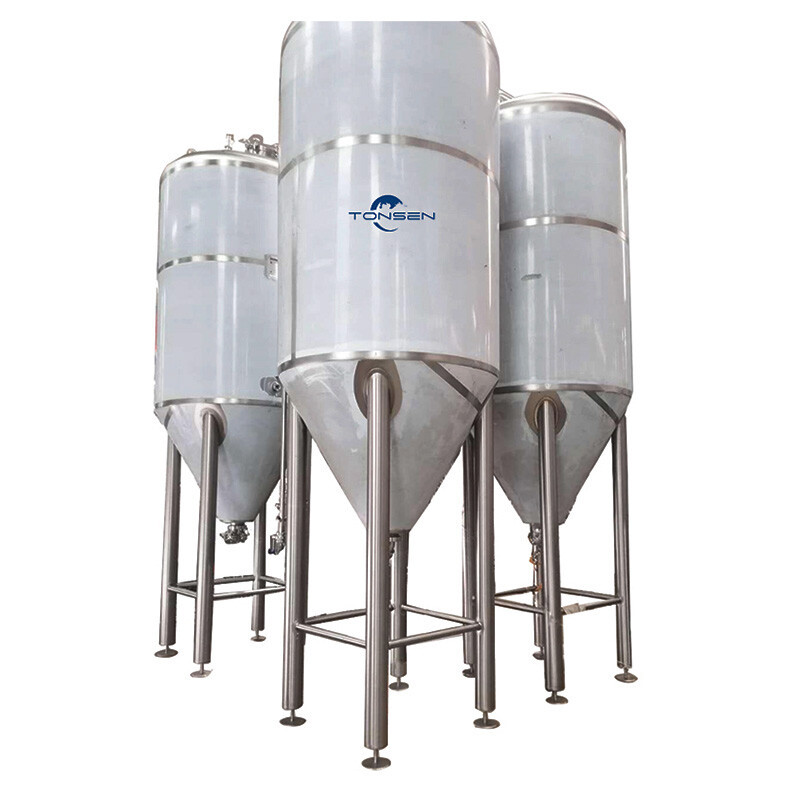
A beer fermentation tank is a stainless steel vessel where wort is fermented after the brewing and cooling process.
After the wort has been cooled to the required fermentation temperature, it is transferred into the fermentation tank and yeast is added. During fermentation, yeast converts the fermentable sugars into alcohol and carbon dioxide. Temperature, pressure, yeast activity, and fermentation time all need to be controlled according to the beer being produced.
For commercial breweries, fermentation tanks are normally designed with cooling jackets, pressure-rated construction, sanitary fittings, temperature control connections, and other components required for brewery operation.
The tank size is usually selected according to the brewhouse capacity and the brewery's production schedule. For example, a brewery using a 1000L brewhouse may need several fermentation tanks to maintain continuous production rather than relying on one tank.
Why Tank Design Matters in Commercial Brewing
Two fermentation tanks may have the same nominal volume but perform differently in daily brewery operation.
The working volume, tank geometry, cooling area, insulation, fittings, pressure rating, and cleaning arrangement all influence how convenient the tank is to use.
A properly designed tank should provide enough headspace for fermentation while allowing the brewer to monitor and control the process. The cooling system should also be suitable for maintaining the required fermentation temperature.
For breweries producing different beer styles, temperature control becomes particularly important. A lager fermentation process, for example, generally requires a different temperature range and fermentation schedule from many ale styles.
This is why a brewery should consider the complete operating requirements before deciding on a tank specification.
Common Features of Commercial Fermentation Tanks
Commercial beer fermentation tanks are commonly manufactured from food-grade stainless steel, with stainless steel 304 being widely used for brewery applications.
Depending on the brewery's requirements, a tank may include:
- Cooling jackets
- Temperature sensor connections
- Pressure gauge
- Pressure relief valve
- Sanitary CIP spray ball
- Sample valve
- Carbonation or gas connections
- Manway
- Sanitary product outlet
- Adjustable legs
- Insulation and stainless steel cladding
The exact configuration can be changed according to the brewery's process and local installation requirements.
For larger projects, the tanks may also be designed to work with a central glycol cooling system and automatic temperature control.
How to Choose the Right Fermentation Tank Size
Tank capacity should not be selected only according to the brewhouse size.
A brewery needs to look at its complete production cycle.
For example, if the brewhouse produces one batch per day, the brewery may require enough fermentation capacity to receive several consecutive batches while previous batches are still fermenting or conditioning.
This means that the number of tanks can be just as important as the size of each tank.
A brewery producing 1000L per batch could choose several 1000L fermentation tanks, while another brewery may prefer larger vessels depending on its production schedule, beer styles, and available floor space.
Before ordering equipment, it is useful to calculate:
- Brewhouse output per batch
- Number of brewing batches per day
- Average fermentation time
- Required beer production per week or month
- Available installation space
- Glycol cooling capacity
- Cleaning and transfer requirements
This calculation gives the equipment supplier a much clearer picture of what the brewery actually needs.
Fermentation Tank Working Volume vs. Total Volume
One detail that is sometimes overlooked is the difference between total tank volume and working volume.
A fermentation tank should not normally be filled completely to the top. Fermentation produces foam and gas, so sufficient headspace is necessary.
For this reason, when a supplier describes a tank as a 1000L fermentation tank, it is important to confirm whether 1000L refers to the working volume or the total geometric volume.
This small difference can affect the actual production capacity of the brewery.
A professional fermentation tank manufacturer should clearly specify both the working capacity and total capacity in the equipment quotation and technical drawing.
Cooling System and Temperature Control
Fermentation generates heat, so temperature control is essential in commercial brewing.
Most commercial fermentation tanks use glycol cooling jackets connected to a glycol chiller or glycol water system. The cooling jackets allow the brewer to remove heat from the beer and maintain the desired fermentation temperature.
The required cooling capacity depends on several factors, including:
- Tank quantity
- Tank volume
- Fermentation temperature
- Ambient temperature
- Wort temperature after transfer
- Brewing schedule
- Insulation performance
For a complete brewery project, the fermentation tanks and glycol system should therefore be considered together.
Installing large fermentation tanks without providing enough cooling capacity can create problems during peak production.
Cleaning and Sanitation
Fermentation tanks need to be cleaned thoroughly between batches.
In a commercial brewery, manual cleaning may become inefficient as production increases. For this reason, tanks are generally equipped with CIP connections and spray devices that allow cleaning solutions to circulate through the vessel.
A good tank design should minimize areas where beer residue or cleaning liquid can remain trapped.
Sanitary welding, suitable internal finishing, proper pipe connections, and appropriate valves are all important details.
These are not always visible in product photos, but they can make a significant difference after the brewery starts operating.
Working With a Fermentation Tank Manufacturer
When purchasing brewery equipment, working directly with an experienced fermentation tank manufacturer can make the specification process easier.
The manufacturer should be able to discuss more than just tank dimensions and prices. They should understand the relationship between fermentation capacity, brewhouse production, cooling systems, cleaning procedures, and brewery layout.
Before placing an order, a brewery can ask the manufacturer for:
- Tank technical drawings
- Working and total volume
- Material specifications
- Tank pressure rating
- Cooling jacket details
- CIP configuration
- Valve and fitting specifications
- Surface finish information
- Testing and inspection details
- Installation requirements
For a complete brewery project, it is also useful to provide the manufacturer with the planned brewhouse capacity, expected production volume, beer styles, local power supply, and available installation space.
This allows the tanks to be designed around the actual brewery rather than using a standard specification that may not fit the project.
Why Stainless Steel Is Commonly Used
Stainless steel has become the standard material for commercial brewery fermentation equipment because it is durable, hygienic, and relatively easy to clean.
The smooth internal surface helps reduce the accumulation of beer residue and makes CIP cleaning more effective.
Stainless steel also has good corrosion resistance and can withstand the repeated cleaning cycles required in a commercial brewery.
For breweries planning long-term production, the quality of stainless steel fabrication is therefore worth considering alongside the tank's basic specifications.
Fermentation Tanks for Brewery Expansion
Fermentation capacity often becomes a limiting factor when a brewery increases production.
A brewery may already have enough brewhouse capacity but still find that fermentation tanks are occupied most of the time. Adding fermentation vessels can be a relatively practical way to increase overall production without replacing the entire brewhouse.
For example, a brewery that initially operates with a small number of fermentation tanks may add additional vessels as demand increases.
This modular approach also allows the brewery to expand gradually according to actual sales and production requirements.
Choosing a Supplier for Commercial Brewery Equipment
Price is naturally an important part of an equipment purchase, but it should not be the only consideration.
The supplier's manufacturing experience, welding quality, tank design, component selection, documentation, and after-sales support can all affect the long-term operation of the brewery.
A reliable supplier should be able to provide clear technical information before production begins and communicate with the brewery about the details of the project.
For international brewery projects, this becomes even more important because transportation, installation, electrical standards, local regulations, and commissioning all need to be considered.
Final Thoughts
A beer fermentation tank is one of the key pieces of equipment in a commercial brewery. The right tank needs to match not only the brewhouse capacity, but also the brewery's production schedule, fermentation process, cooling system, cleaning method, and future expansion plans.
Instead of choosing a tank based only on volume or price, breweries should look at the complete system and the technical details behind the equipment.
For breweries planning a new production line or expanding an existing facility, discussing the project directly with an experienced fermentation tank manufacturer can help determine the appropriate tank capacity, configuration, cooling requirements, and number of vessels.
The goal is simple: equipment that fits the brewery's actual production process and continues to work reliably as production grows.
MESSAGE